
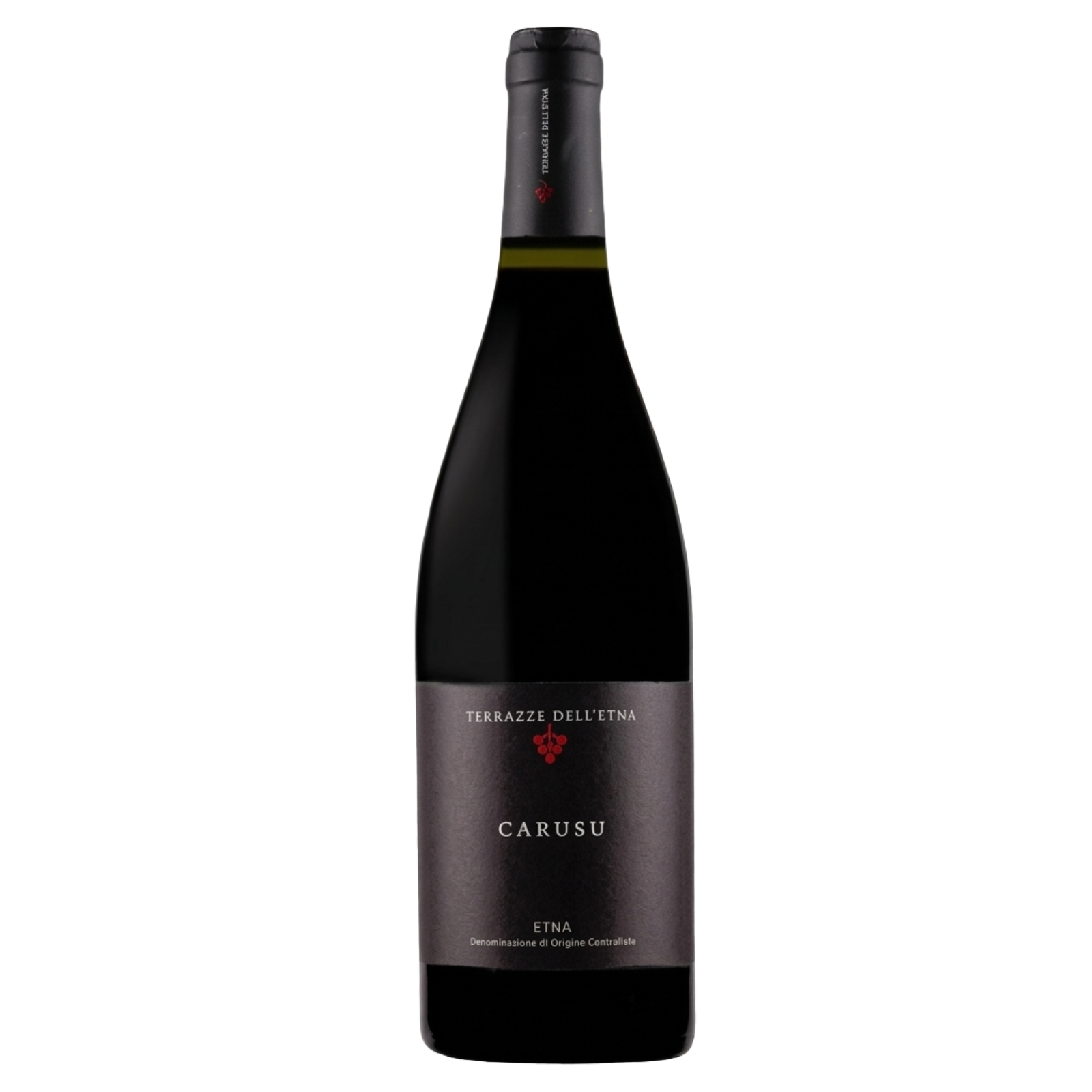
Terrazze dell’Etna Carusu Etna Rosso 2019
Type: Red
Country: Italy
Region: Sicily, Etna
Grape Variety: 80% Nerello Mascalese, 20% Nerello Cappuccio
Alcohol Percentage: 14.5%
Viticulture: Organic Farming
Climate: Mediterranean High-Altitude climate; intense solar radiation combined with dramatic diurnal shifts and cool mountain breezes from Mt. Etna
Terroir: Northwest slopes of Mt. Etna in the municipality of Randazzo (~600 meters elevation); volcanic soils rich in dark basaltic ash, pumice, and ancient decayed lava flows.
Ageing: Fermentation in temperature-controlled stainless steel tanks; aged for 6 to 12 months in large neutral oak barrels (500L tonneaux and large casks), followed by at least 12 months of bottle maturation prior to release.
Color: Clear, translucent ruby red with garnet reflections
Nose: Elegant and complex; red cherries, wild strawberries, and rosehips balanced by delicate floral notes of violet, Mediterranean brush, savory star anise, and a distinct smoky volcanic ash minerality.
Palate: Medium-bodied, vibrant, and structured; juicy red berry fruit supported by crisp acidity, fine-grained firm tannins, and a long, energetic, chalky-saline finish.
About the Winery:
Terrazze dell’ Etna winery was founded in 2008 by Nino Bevilacqua, an engineer from Palermo, when legendary Italian winemaker Riccardo Cotarella helped him to plan and build this extraordinary property. Stretching over 36 hectares including a mix of vineyards, olive trees, cherry trees, chestnut trees, and oaks, the estate grows all of its own grapes at altitudes that range from 600 to 950 meters a.s.l. — some of the highest-lying vineyards in the world.
The name of the winery was inspired by the traditional terracing method (terrazza means terrace in Italian) that the Bevilacqua family revived when it purchased the farm more than a decade ago. Although the family also grows some international varieties for its classic-method sparkling wines, here the focus is on the native Nerello family of red grapes, Nerello Mascalease (the primary grape used in Etna wines) and Nerello Cappuccio. Farming here is only done by hand and the estate employs integrated farming techniques which encompasses upkeeping a variety of crops and livestock to enhance biodiversity. The soils are volcanic in nature, produced over the centuries by Mt. Etna in the vicinity. Terrazze dell’ Etna also practises a traditional approach to winemaking, with minimal intervention to create one of the appellation’s purest expressions.


